

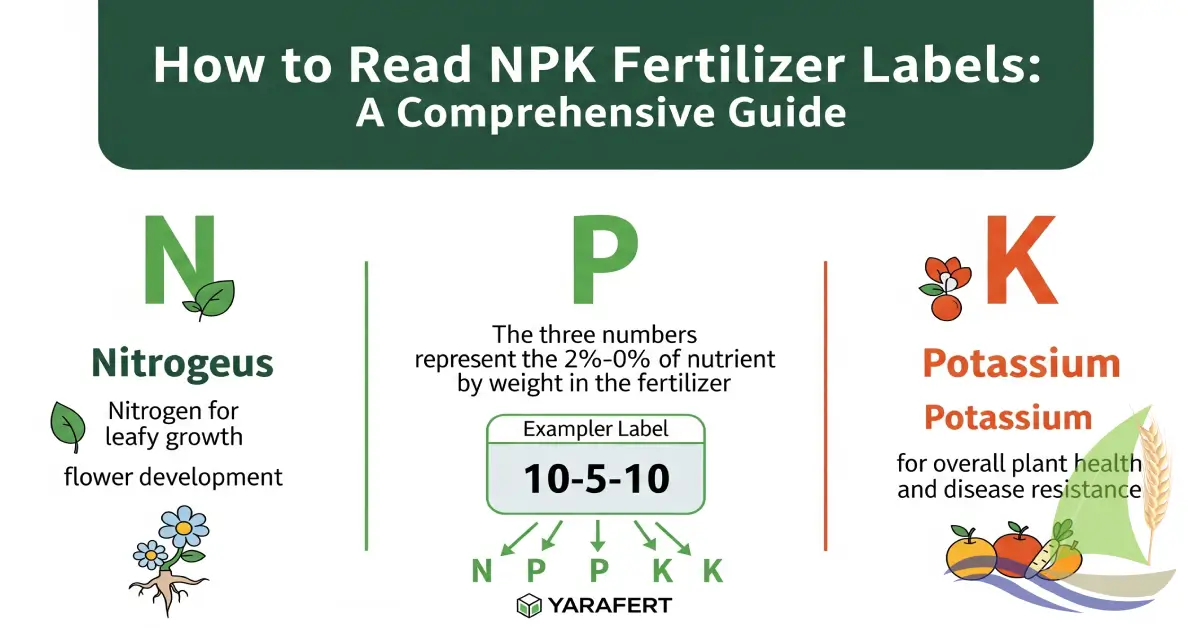
Soil fertility is the foundation of sustainable agriculture, and one of the most effective ways to maintain it is through balanced nutrient management. NPK fertilizer—which provides nitrogen (N), phosphorus (P), and potassium (K)—is a cornerstone of modern farming. These macronutrients are critical for plant growth, root development, and crop productivity. Understanding how NPK fertilizer influences soil health helps farmers optimize yields while preserving long-term soil vitality.
In this guide, we explore how NPK fertilizer contributes to soil productivity, its long-term effects, and strategies for integrating it into comprehensive fertility programs. We’ll also highlight how advanced solutions such as yarafert products—including Biofast, Ugarit formulations, and Sulfomin—help farmers achieve balanced nutrition in diverse cropping systems.
How NPK Fertilizer Contributes to Soil Productivity
The productivity of soil depends largely on its ability to supply plants with essential nutrients. NPK fertilizer plays a vital role by replenishing the three nutrients most rapidly depleted during crop growth.
- Nitrogen (N): Stimulates vegetative growth, chlorophyll formation, and protein synthesis.
- Phosphorus (P): Supports root development, energy transfer (ATP), and early crop establishment.
- Potassium (K): Enhances water regulation, enzyme activation, and disease resistance.
When applied correctly, NPK fertilizer helps soils sustain higher yields, improved crop quality, and resilience against stress. For example, products like Biofast (12-12-12 with humic and fulvic acids) not only supply balanced NPK but also improve soil structure and microbial activity, leading to better nutrient availability.
Balancing Nutrients with NPK Fertilizer Application
While NPK fertilizers are essential, the key lies in applying them in balanced proportions. Over-reliance on one nutrient can disrupt soil chemistry and limit plant uptake. Balanced fertilization ensures that plants receive optimal nutrition without leaving deficiencies or toxicities behind.
Farmers can achieve this balance by:
- Soil Testing: Assessing nutrient status before application.
- Crop-Specific Formulations: Using fertilizers like Ugarit 27-27-27 + TE, which delivers equal NPK along with trace elements for cereals and vegetables.
- Stage-Based Application: Matching nutrient ratios with crop growth stages. For example:
- High nitrogen early for leaf development.
- Increased phosphorus during root establishment.
- Higher potassium at fruiting for yield quality.
Balanced programs may also include specialty products like Ugarit 10-10-40 + TE, designed for fruiting crops where potassium demand peaks.
READ MORE: Can NPK Fertilizer Be Used in Hydroponics? A Complete Guide
Long-Term Soil Effects of Regular NPK Fertilizer Use
The long-term use of NPK fertilizer has both benefits and risks. On the positive side, consistent nutrient replenishment supports sustainable crop rotations and prevents nutrient mining. However, excessive or imbalanced use can cause soil acidification, reduced microbial activity, or nutrient leaching.
To mitigate risks, farmers should integrate NPK fertilizer with organic matter, micronutrients, and soil conditioners. For example:
- Sulfomin (45% N + 15% S + organic matter) improves nitrogen efficiency while boosting sulfur, a secondary nutrient often overlooked in soil management.
- Sulfomix (multi-micronutrient suspension) prevents hidden hunger by supplying iron, zinc, and boron along with sulfur and magnesium.
Over time, this integrated approach preserves soil health, enhances nutrient-use efficiency, and reduces environmental impact.
Integrating NPK Fertilizer into Fertility Programs
An effective fertility program should combine NPK fertilizer with complementary products that address secondary and micronutrient needs. By tailoring solutions to specific crops and soils, farmers maximize productivity without overloading the soil.
Here’s how integrated programs can be designed:
- Base Nutrition: Apply products like Ugarit 25-25-25 + TE to provide a strong NPK foundation.
- Crop-Specific Boosts: Use Ugarit Beet for sugar beet, Ugarit Grapes for vineyards, or Ugarit Cereal for wheat and barley.
- Stress Management: Employ CALCIMAG (15% N, 22% Ca, 3% Mg, plus B) to strengthen plant cell walls and mitigate stress.
- Soil Conditioning: Incorporate organic-rich products like Ugarit 10-0-5 + 70% organic matter, which improves soil structure and microbial health.
By following this layered approach, fertility programs address both immediate crop needs and long-term soil vitality.
Preventing Nutrient Depletion with Proper NPK Fertilizer Use
Continuous cropping without proper nutrient replenishment leads to soil depletion. Strategic use of NPK fertilizer prevents this decline by replacing nutrients removed during harvest. However, precision is critical to avoid nutrient imbalances.
Farmers can adopt the following strategies:
- Use High-Analysis Fertilizers: Products like Ugarit 0-52-34 (high phosphorus and potassium) correct specific deficiencies efficiently.
- Apply Complementary Nutrients: Pairing NPK fertilizer with sulfur-rich solutions like Ugarit Multi (30% K?O, 32% S, 10% Ca) ensures secondary nutrient balance.
- Seasonal Planning: Rotate formulations such as Ugarit DKP (33% P?O? + 44% K?O) for flowering and Super DKP (30% P?O? + 60% K?O) for fruit filling.
- Incorporate Micronutrient Suspensions: Use Sulforex 60 + Cu or Sulforex 80 + S to replenish sulfur and copper, essential for enzymatic activity and disease resistance.
These practices not only prevent depletion but also enhance soil resilience, making farms more sustainable in the long run.
Technical Snapshot: NPK and Soil Interaction
| Nutrient | Primary Function | Example Product | Additional Benefit |
|---|---|---|---|
| Nitrogen (N) | Leaf growth, protein synthesis | Sulfomin (45% N + 15% S) | Improved protein content |
| Phosphorus (P?O?) | Root growth, energy transfer | Ugarit 0-52-34 | Faster root establishment |
| Potassium (K?O) | Stress tolerance, fruit quality | Ugarit 10-10-40 + TE | Enhanced sugar accumulation |
This integration of nutrient roles and product solutions demonstrates how NPK fertilizer programs can be optimized for soil and crop health.
Final Thoughts
The role of NPK fertilizer in soil fertility goes beyond immediate crop nutrition. It is about sustaining productivity, preventing nutrient mining, and building long-term soil resilience. By integrating advanced solutions like yarafert products—from Biofast gels to Ugarit suspensions and Sulfomin liquids—farmers can achieve both high yields and healthy soils.
Ready to improve your soil fertility strategy with tailored NPK fertilizer solutions? Explore our full range of yarafert products, or contact our team today for expert guidance on building a customized fertility program that works for your crops and your soil.
READ MORE: Common Myths About NPK Fertilizer Debunked