

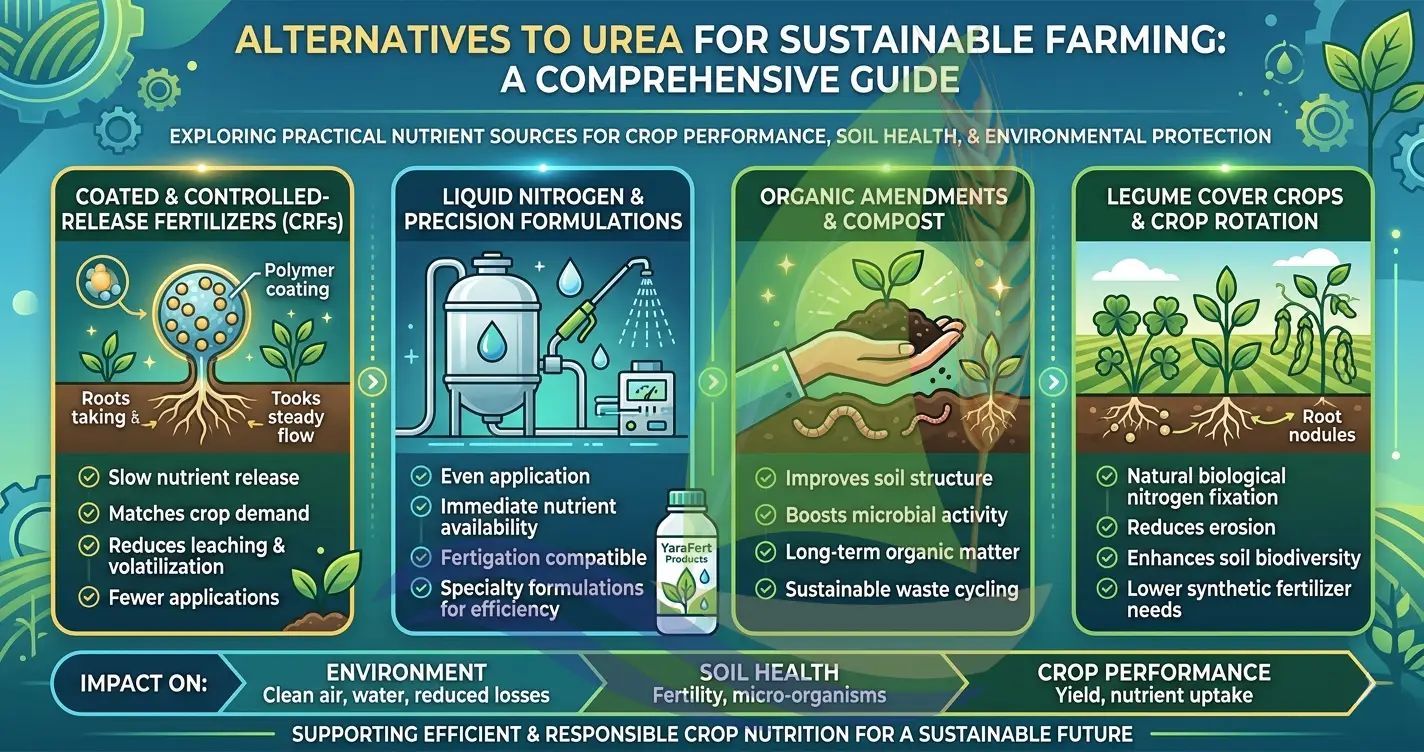
Urea fertilizer has long been one of the most widely used nitrogen sources in agriculture due to its high nitrogen content and affordability. However, modern farming increasingly focuses on sustainability, soil health, and environmental protection. As a result, farmers are exploring alternative nutrient sources that deliver strong crop performance while reducing environmental impact.
This comprehensive guide explores practical alternatives to urea fertilizer, compares their performance, and highlights sustainable solutions—including advanced nutrient formulations such as yarafert products—that support efficient and responsible crop nutrition.
Organic Substitutes for Urea Fertilizer
Organic nutrient sources are among the most accessible alternatives to urea fertilizer, especially for farmers seeking to enhance soil structure and long-term fertility.
Before selecting an organic substitute, it is important to understand the most commonly used options and how they function in the soil ecosystem. The following organic materials are widely recognized for their effectiveness:
- Compost: Improves soil organic matter while releasing nitrogen gradually.
- Animal manure: Supplies nitrogen, phosphorus, and potassium along with beneficial microbes.
- Green manure crops: Legumes such as clover fix atmospheric nitrogen naturally.
- Vermicompost: Provides balanced nutrients and enhances microbial activity.
- Bone meal and blood meal: Deliver concentrated organic nitrogen sources.
Organic fertilizers typically release nitrogen slowly through microbial decomposition. This gradual release reduces nitrogen losses compared to conventional urea fertilizer, making them particularly valuable for sustainable systems.
In many practical farming scenarios, organic inputs are complemented with micronutrient solutions such as SULFOMIX, which contains iron (Fe), zinc (Zn), magnesium (MgO), manganese (Mn), copper (Cu), boron (B), sulfur (S), and molybdenum (Mo). These trace nutrients help ensure crops receiving organic nitrogen maintain balanced growth and strong metabolic activity.
Bio-Based Alternatives to Urea Fertilizer
Bio-based fertilizers represent an emerging category designed to replace or reduce dependence on urea fertilizer while supporting soil biology and nutrient efficiency.
These products combine biological compounds with nutrient elements to improve plant uptake efficiency. Among the most promising bio-based solutions are:
- Humic and fulvic acid fertilizers
- Biofertilizers containing nitrogen-fixing bacteria
- Seaweed-based nutrient formulations
- Microbial inoculants
For example, gel-based nutrient products such as Biofast, containing:
- Nitrogen (N): 12%
- Phosphorus (P?O?): 12%
- Potassium (K?O): 12%
- Humic Acid: 24%
- Fulvic Acid: 24%
provide a biologically active alternative to urea fertilizer. The inclusion of humic and fulvic acids improves nutrient chelation and enhances root development, allowing crops to absorb nitrogen more efficiently.
Similarly, organic-rich granular products such as Ugarit 10-0-5 + 70% Organic Matter contribute both nitrogen and soil-conditioning compounds. These formulations improve soil structure, water retention, and nutrient buffering capacity, which are often compromised by excessive reliance on urea fertilizer.
Performance of Alternatives vs. Urea Fertilizer
Performance comparison is essential when evaluating substitutes for urea fertilizer. While urea delivers rapid nitrogen availability, many alternatives provide balanced nutrition and improved nutrient efficiency.
The following table summarizes key performance characteristics:
| Parameter | Urea Fertilizer | Organic Alternatives | Bio-Based Alternatives |
|---|---|---|---|
| Nitrogen Content (%) | 46% | 1–10% | 8–20% |
| Release Rate | Fast | Slow | Controlled |
| Soil Health Impact | Neutral to Negative | Positive | Highly Positive |
| Nutrient Efficiency | Moderate | Moderate | High |
| Risk of Loss | High (leaching/volatilization) | Low | Low |
Many farmers combine alternatives with balanced NPK solutions such as Ugarit 27-27-27 + TE or Ugarit 25-25-25 + TE, which provide uniform nutrient supply along with trace elements. This balanced approach often delivers comparable yields to urea fertilizer, particularly when integrated with soil management practices.

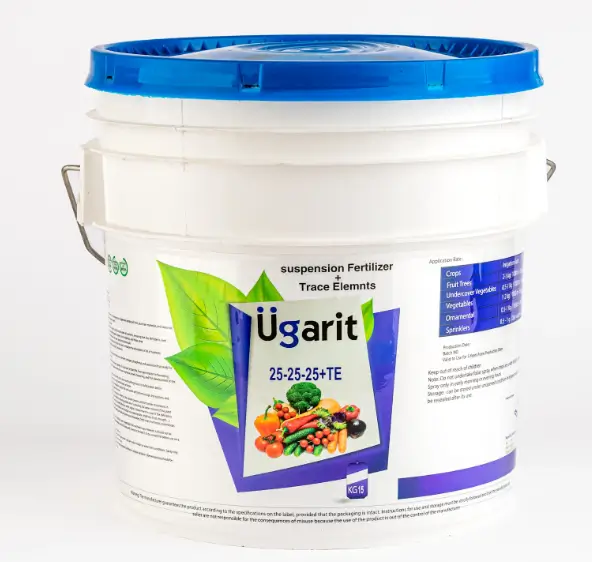
Another effective strategy involves potassium-sulfur fertilizers such as Ugarit K-T-S 25 or Ugarit K-T-S 70, which improve protein synthesis and nitrogen utilization efficiency. When nitrogen sources are supported by adequate potassium and sulfur, crop productivity frequently matches that of systems dominated by urea fertilizer.
Environmental Benefits of Urea Fertilizer Substitutes
One of the primary reasons farmers seek alternatives to urea fertilizer is the environmental risk associated with nitrogen losses.
Nitrogen losses from conventional fertilizers occur through:
- Volatilization: Conversion of nitrogen into ammonia gas
- Leaching: Movement of nitrates into groundwater
- Runoff: Transport of nutrients into rivers and lakes
- Denitrification: Release of nitrous oxide (N?O), a greenhouse gas
The chemical transformation of urea can be represented as:CO(NH?)?+H2?O?2NH3?+CO2?
This reaction illustrates how ammonia volatilization can occur, especially under warm or alkaline soil conditions.
Bio-based and organic alternatives significantly reduce these environmental risks. Products rich in organic matter, such as SULPHOMIN, containing nitrogen (45%), sulfur (15%), and organic matter (25%), improve nitrogen retention in the soil matrix.
Similarly, calcium- and magnesium-containing products such as CALCIMAG enhance soil buffering capacity and improve nutrient stability, reducing the ecological footprint associated with repeated applications of urea fertilizer.
Environmental benefits of switching to alternatives include:
- Reduced greenhouse gas emissions
- Improved soil microbial diversity
- Lower nitrate contamination of groundwater
- Increased long-term soil fertility
Cost Comparison of Urea Fertilizer and Alternatives
Cost remains one of the most influential factors when evaluating alternatives to urea fertilizer. While urea is typically cheaper per unit of nitrogen, the true cost must consider nutrient efficiency, environmental impact, and long-term soil health.
The following table provides a simplified cost-performance comparison:
| Factor | Urea Fertilizer | Organic Fertilizers | Bio-Based Fertilizers |
|---|---|---|---|
| Initial Cost | Low | Moderate | Moderate to High |
| Application Frequency | High | Moderate | Low |
| Soil Improvement Value | Low | High | Very High |
| Yield Stability | Moderate | High | High |
| Long-Term Cost Efficiency | Moderate | High | High |
Although urea fertilizer may appear economical initially, nutrient losses often increase the total application requirement. In contrast, balanced nutrient solutions—such as Ugarit 40-10-10 + TE or Ugarit Multi, containing potassium, sulfur, and calcium—enhance nutrient uptake efficiency and reduce repeated fertilizer use.
Additionally, phosphorus-rich formulations such as Phosphoric Acid 85% w/v or Ugarit DKP improve root development, helping plants access existing soil nutrients more effectively. This approach reduces reliance on large volumes of urea fertilizer, ultimately improving economic sustainability.
Integrating Sustainable Fertilizer Strategies
Successful transition from urea fertilizer to alternatives requires a systematic approach. Farmers who adopt integrated nutrient management strategies often achieve the best results.
Before implementing new fertilizers, consider the following practical guidelines:
- Conduct soil testing to determine nutrient deficiencies.
- Combine organic and mineral fertilizers for balanced nutrition.
- Apply fertilizers at growth stages with the highest nutrient demand.
- Monitor crop performance and adjust nutrient programs seasonally.
- Use micronutrient blends to prevent hidden deficiencies.
Crop-specific solutions such as Ugarit Cereal, Ugarit Strawberry, and Ugarit Grapes provide targeted nutrient support tailored to crop physiology. These specialized formulations enhance nutrient efficiency, enabling growers to reduce dependence on traditional urea fertilizer programs.
Conclusion: Moving Toward Sustainable Nitrogen Management
The global shift toward sustainable agriculture is transforming how farmers view urea fertilizer and its alternatives. While urea remains a valuable nitrogen source, integrating organic and bio-based fertilizers offers substantial advantages in soil health, environmental safety, and long-term profitability.
Advanced nutrient solutions—including micronutrient blends like SULFOMIX, bio-enhanced formulations such as Biofast, and balanced nutrient systems from the yarafert range—provide practical pathways to maintain productivity while supporting sustainability goals.
Take the Next Step Toward Sustainable Fertilization
Ready to reduce reliance on conventional urea fertilizer and improve your crop performance sustainably?
- Explore the full range of yarafert nutrient solutions tailored to your crops and soil conditions.
- Contact our agronomy specialists for personalized fertilizer recommendations.
- Start implementing integrated nutrient strategies today to boost yields, protect soil health, and enhance long-term farm profitability.