

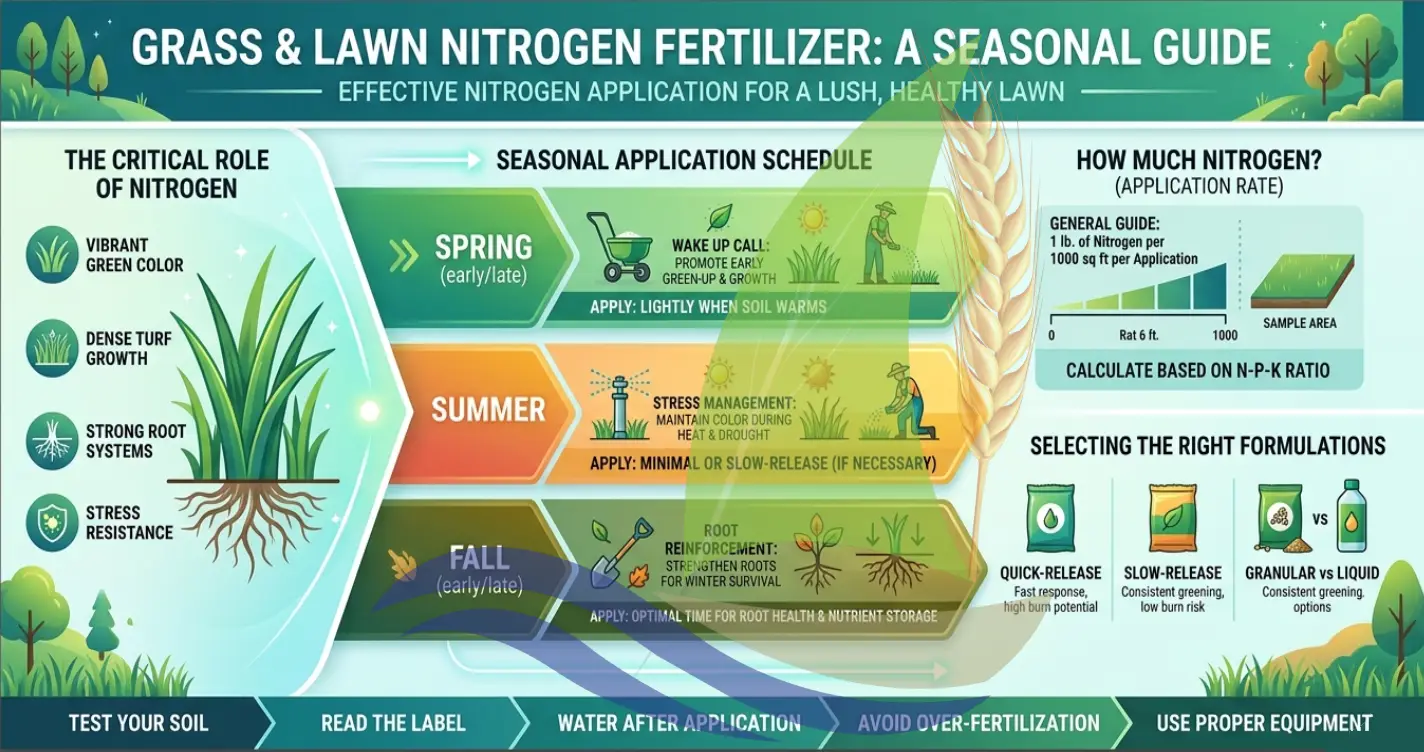
Maintaining a lush, green lawn requires more than regular mowing and watering—it demands the right nutrition at the right time. Among all nutrients, nitrogen fertilizer plays the most critical role in promoting vibrant color, dense turf growth, and strong root systems. This comprehensive seasonal guide explains how to apply nitrogen fertilizer effectively, how much to use, and how to select the right formulations for long-term turf health.
When to Apply Nitrogen Fertilizer to Cool- and Warm-Season Grasses
Understanding grass type is the foundation of successful nitrogen fertilizer use. Cool-season and warm-season grasses grow at different times of the year, meaning their nutrient needs also vary.
Before applying any fertilizer, identify which grass category your lawn belongs to:
Cool-Season Grasses
Cool-season grasses such as fescue, ryegrass, and bluegrass thrive in cooler temperatures.
For these grasses, apply nitrogen fertilizer during:
- Early spring: Encourages recovery from winter dormancy
- Late spring: Supports active growth
- Early fall: Strengthens root development
- Late fall: Builds reserves for winter survival
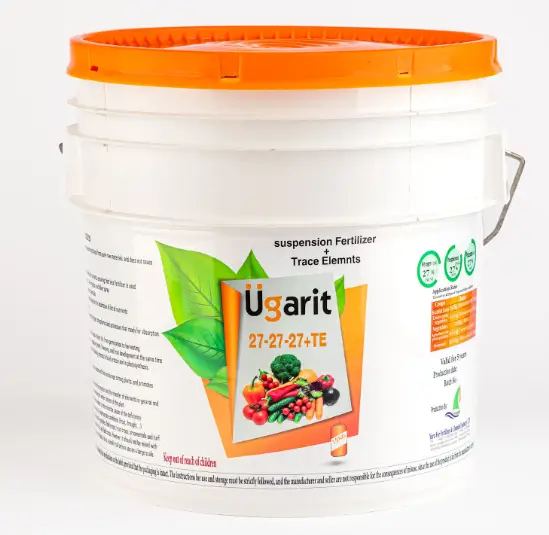
Using balanced nutrient solutions such as Ugarit 27-27-27 + TE or Ugarit 25-25-25 + TE supports steady growth while delivering trace elements essential for chlorophyll development.
Warm-Season Grasses
Warm-season grasses like Bermuda and Zoysia grow actively in warm temperatures.
Apply nitrogen fertilizer during:
- Late spring: Kickstarts seasonal growth
- Summer: Maintains density and color
- Early fall: Extends healthy turf performance
Products such as Ugarit 40-10-10 + TE, with a higher nitrogen content, are well suited to vigorous summer growth cycles.
How Much Nitrogen Fertilizer Lawns Need per Season
Applying the correct amount of nitrogen fertilizer prevents nutrient waste and protects turf health. Over-application may damage roots, while under-application results in weak growth.
Recommended Seasonal Nitrogen Rates
The amount of nitrogen required depends on grass type and lawn use intensity.
| Grass Type | Annual Nitrogen Requirement | Application Frequency |
|---|---|---|
| Cool-season grass | 2–4 kg N per 100 m² | 3–4 applications |
| Warm-season grass | 2–5 kg N per 100 m² | 3–5 applications |
| High-traffic lawns | 4–6 kg N per 100 m² | 4–6 applications |
The chemical formula for nitrogen nutrition in turf is often expressed as:
N ? Protein Formation ? Chlorophyll Production ? Photosynthesis Efficiency
This process directly influences turf density and color.
To improve nutrient uptake and soil activity, combining nitrogen sources with organic stimulants such as Ugarit 10-0-5 + 70% Organic Matter supports microbial growth and improves nutrient retention.
Similarly, Biofast—containing nitrogen, phosphorus, potassium, humic acid, and fulvic acid—enhances nutrient mobility and improves root-zone efficiency.
Choosing the Best Nitrogen Fertilizer for Turf Health
Selecting the right nitrogen fertilizer requires understanding soil needs, growth stages, and nutrient balance.
Several factors influence fertilizer performance:
- Nitrogen form (quick-release vs slow-release)
- Presence of secondary nutrients
- Micronutrient composition
- Soil structure and organic matter levels
Essential Nutrients That Complement Nitrogen
Healthy turf depends on more than nitrogen alone. The following supporting nutrients play a critical role:
- Iron (Fe): Enhances deep green color
- Magnesium (Mg): Essential for chlorophyll production
- Sulfur (S): Improves nitrogen efficiency
- Zinc (Zn): Supports enzyme activation
Micronutrient blends such as SULFOMIX, which contains iron, zinc, magnesium, manganese, copper, boron, sulfur, and molybdenum, provide comprehensive support for turf vitality.
Additionally, sulfur-rich products such as SULPHOMIN, containing nitrogen and sulfur, improve nutrient availability and support long-term soil fertility.
Nitrogen Fertilizer Types
The following table outlines common types of nitrogen fertilizers used in turf management:
| Fertilizer Type | Nitrogen Release Speed | Best Use Case |
|---|---|---|
| Quick-release | Fast | Immediate color boost |
| Slow-release | Gradual | Long-term growth |
| Liquid nitrogen | Rapid absorption | Precision feeding |
| Granular nitrogen | Controlled | Seasonal maintenance |
Liquid formulations such as CALCIMAG, combining nitrogen with calcium and magnesium, strengthen plant tissues and improve turf resilience under stress.
Avoiding Nitrogen Fertilizer Burn on Residential Lawns
Fertilizer burn occurs when excessive nitrogen salts damage turf tissues. Proper application techniques significantly reduce this risk.
Before applying nitrogen fertilizer, consider these preventative steps:
Practical Tips to Prevent Fertilizer Burn
To maintain turf safety and avoid costly damage, follow these guidelines:
- Apply fertilizer to dry grass, then irrigate immediately
- Use calibrated spreaders for uniform distribution
- Avoid fertilizing during extreme heat
- Follow label-recommended rates precisely
- Divide large applications into smaller doses
Salt accumulation from nitrogen compounds increases osmotic pressure in the soil, causing dehydration of grass tissues—a condition known as fertilizer burn.
Balanced formulations such as Ugarit Multi, containing potassium, sulfur, and calcium, help regulate plant stress and improve tolerance to nutrient fluctuations.
Additionally, potassium-rich fertilizers like Ugarit 10-10-40 + TE improve turf durability and reduce susceptibility to nitrogen-related damage.
Seasonal Timing for Nitrogen Fertilizer to Maintain Lawn Color
Maintaining consistent lawn color requires aligning nitrogen fertilizer applications with seasonal growth patterns.
Each season presents unique turf challenges that influence nitrogen demand.
Spring Lawn Nutrition
Spring fertilization supports early growth and root establishment.
Recommended strategies include:
- Apply moderate nitrogen fertilizer rates
- Combine with phosphorus to stimulate root growth
- Include micronutrients to enhance chlorophyll formation
Products such as Ugarit 10-65-10 provide strong phosphorus support during early development stages.
Summer Lawn Nutrition
Summer conditions increase stress due to heat and foot traffic.
For summer feeding:
- Use slow-release nitrogen sources
- Supplement with potassium to improve stress tolerance
- Apply irrigation immediately after fertilization
High-potassium solutions such as Ugarit K-T-S 25 and Ugarit K-T-S 70 improve water regulation and turf resilience.


Fall Lawn Nutrition
Fall is one of the most important times for nitrogen fertilizer application.
During this season:
- Apply moderate-to-high nitrogen levels
- Strengthen roots before winter dormancy
- Improve next-season recovery
Balanced fertilizers like Ugarit 27-27-27 + TE support nutrient storage and long-term turf health.
Winter Preparation Strategies
In regions with cold winters, late-season fertilization prepares turf for dormancy.
To support winter survival:
- Apply low rates of nitrogen fertilizer
- Use calcium and magnesium supplements
- Avoid heavy applications during frost periods
Products such as CALCIMAG reinforce cell structure and improve cold tolerance.

Integrated Nutrient Support for Long-Term Turf Success
For professional turf managers and homeowners alike, combining nitrogen with secondary nutrients ensures consistent results.
Advanced nutrient strategies typically include:
- Nitrogen for growth
- Phosphorus for roots
- Potassium for stress resistance
- Micronutrients for metabolic efficiency
To visualize nutrient balance, consider the simplified turf nutrition ratio:
Optimal Turf Ratio: N : P : K = 3 : 1 : 2
This ratio supports vigorous growth while maintaining structural integrity and disease resistance.
Using formulations like Ugarit 0-5-65, Ugarit DKP, or Super DKP allows fine-tuning of potassium and phosphorus levels depending on seasonal needs.
Final Thoughts: Building a Greener Lawn with Smart Nitrogen Fertilizer Practices
Effective lawn care depends on timing, accuracy, and nutrient balance. When applied strategically, nitrogen fertilizer promotes dense growth, rich color, and long-term turf resilience.
By understanding seasonal timing, selecting balanced nutrient blends, and preventing application errors, homeowners and turf professionals can achieve consistently healthy lawns year-round.
Take the Next Step Toward Healthier Turf
If you’re ready to improve lawn performance and maximize nutrient efficiency:
- Explore the full range of yarafert products designed for turf and soil optimization
- Consult with experienced agronomy specialists to develop a customized fertilization program
- Choose scientifically formulated solutions such as Ugarit, SULFOMIX, Biofast, and CALCIMAG to deliver measurable results
Visit our website or contact our technical team today to discover how advanced nitrogen fertilizer solutions can transform your lawn into a vibrant, resilient landscape.